Most TV-buying regret comes from paying for specs you will never notice while missing the two that shape every single viewing session: the panel type and how the set handles brightness in your actual room. Everything else on the spec sheet — the marketing words, the bundled apps, the peak number in giant type on the box — is either a genuine tiebreaker or noise, and the trick is knowing which is which. The good news is that the decision is simpler than the tag in the store makes it look.
This guide walks through what the specifications really do, which ones deserve your money, and when the calendar works in your favor. The short version: buy for the panel and the picture processing first, treat the rest as a checklist, and time the purchase to the sale seasons rather than the moment your old set dies. A television is one of the few purchases where waiting a few weeks can save real money, because the discount cycle is predictable.
Which panel type should you actually buy?
Every mainstream TV today uses one of three broad display technologies, and the choice matters more than any other line on the spec sheet. LED LCD sets light up a liquid-crystal panel from behind, and they remain the budget-friendly default: bright, widely available, and fine for kitchens and bright rooms. OLED sets make every pixel produce its own light, which delivers the deepest blacks and the most striking contrast in a dim room — the format film lovers tend to covet. QLED and similar variants are LED sets with a color-boosting layer, usually brighter than standard LED at a mid-range price.
The honest trade-off is brightness versus black level. A good LED set can look punchier than an OLED in a sunlit living room, because it can push more light through the screen. An OLED looks almost three-dimensional at night, when the dark parts of the image go truly dark instead of gray. Neither is wrong. The question is where the TV lives: a bright, window-heavy room pushes you toward LED-based designs, while a room you can dim rewards OLED.
What this means in practice is that room conditions should drive the decision before brand loyalty does. Measure your room's light, then pick the technology that suits it, and only then start comparing models within that type. Buyers who reverse the order — brand first, panel second — are the ones who end up explaining to guests why the picture looks washed out at noon.
Does refresh rate matter as much as the sticker says?
Refresh rate is how many times per second the screen redraws the image, and it is the spec most often inflated by marketing. The common numbers are 60 and 120, sometimes dressed up in proprietary names that make 60 sound like 120. For films, dramas, and most streaming television, 60 is genuinely enough; a movie is shot at 24 frames per second, and no panel setting changes that. Where 120 earns its keep is fast motion — live sports, and gaming on a modern console — where smoother motion and lower lag are visible to a careful eye. For related coverage, see Why Live Sports Became Network Television's Last Moat.
So the rule is simple. If the set is for prestige dramas and the occasional sitcom, spend nothing extra on refresh rate. If it anchors a sports household or a gaming setup, the higher rate is one of the few upgrades that shows up on screen every time you use it. Watch for the wording, though: some sets advertise a boosted figure achieved by software tricks rather than a native panel rating, and the tricks can introduce artifacts of their own. The native number is the one that counts. We covered a connected angle in The Number That Ends a Show: How Renewal Decisions Actually Get Made.
Which specs can you safely ignore?
Several spec-sheet lines deserve less attention than they get. Built-in smart platforms are the clearest case: every modern TV ships with apps, and if you dislike the set's interface, an inexpensive streaming stick replaces it entirely. Speaker quality is another — even premium televisions sound mediocre, because there is nowhere to put decent drivers in a thin panel, so plan on a soundbar or a sound system regardless of what the box promises. Screen-size marketing labels like "class" describe a nominal size that can vary slightly from the real one, which matters only if you are fitting the set into a tight alcove.
The features worth paying for, by contrast, are the ones that affect the image itself: support for high dynamic range (HDR, which expands the range between the brightest and darkest parts of a picture), a full set of the ports your devices need, and decent out-of-box color accuracy. HDR support is now nearly universal on new sets, but implementations vary widely, and a bright panel with good local dimming will show HDR far better than a cheap one that merely carries the label.
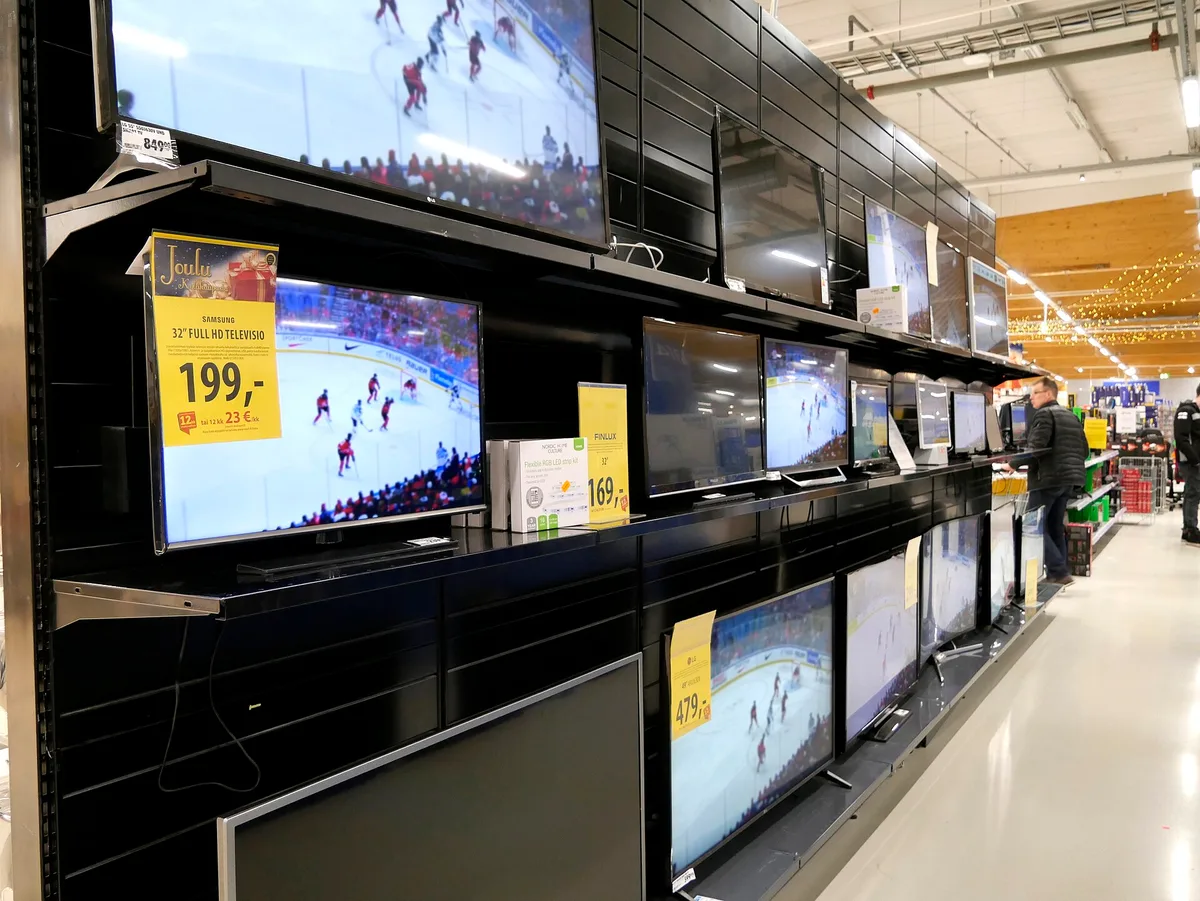
One practical step beats every spec on the page: look at the set in person, playing content similar to what you watch. Store floors are notoriously unhelpful here — everything runs at factory-vivid settings under bright lights — but even a few minutes in front of a demo loop tells you more about motion handling and color than any number. Retailers are increasingly building hands-on display areas for exactly this reason; the Best Buy store in Brandon, Florida, for example, describes its in-store experience as a way for customers to explore products through interactive demos and displays rather than boxes on a shelf, a setup that applies across its store locations.
When is the best time to buy a TV on sale?
Television prices run on a predictable seasonal rhythm, and timing matters as much as model choice. The deepest discounts cluster around the late-autumn shopping events, when retailers use televisions — the single most price-comparable electronics category — as headline deals to pull shoppers in. A second dependable window arrives in late winter, ahead of the spring model changeover, when retailers clear the prior year's stock to make room for new panels. Both windows reward the same behavior: identify the model you want early, track its price for a few weeks, and buy when it dips rather than when a banner screams "sale."
The caveat is stock. Deeply discounted models, especially larger sizes of well-reviewed sets, can sell out mid-event, and the remaining inventory sometimes shifts to less desirable variants of the same model number. If a specific set is the goal, buying early in the discount window beats waiting for a price that may never arrive. If flexibility is the goal, the clearance periods offer the best value per dollar of the whole year. Either way, the worst time to buy is the week your old set dies, when urgency hands all the leverage to the retailer — a lesson one would-be buyer documented in a public review of a Florida Best Buy, describing a delivery slot that fell through within a day of purchase; scheduling and stock are part of the real price.
Our analysis of how the discount cycle works suggests a simple discipline: decide on panel type and size first, shortlist two or three models, and then let the calendar come to you. The set you want at last winter's clearance price is a better purchase than a different set bought at full price tonight.
What should you check before the return window closes?
The first days of ownership are part of the purchase. Put the set through the content you actually watch — a dim drama, a bright sports broadcast, a game — and check the corners of the panel for uniformity defects while the return window is open. Confirm that all your devices connect and that the inputs behave. If delivery and installation are part of the deal, inspect the screen before the crew leaves; shipping damage to large panels is a known hazard, and a chipped corner noted at delivery is far easier to resolve than one discovered a week later.
Keep the box until you are certain. It sounds trivial, but repacking a large television without its original packaging is genuinely difficult, and returns or exchanges go far more smoothly with it. None of this is about distrust; it is about treating the purchase as a process rather than a moment, which is, in the end, the whole philosophy of buying without regret.
The picture, and the point
The evidence here is mostly structural rather than statistical: panel technology determines how a set behaves in your room, refresh rate matters for motion and almost nothing else, the smart platform is replaceable, and the discount calendar is reliable enough to plan around. What remains unknown is any specific model's long-term reliability, which no spec sheet predicts and which is the strongest argument for buying from a retailer with a return policy you have actually read.
For a magazine that spends its days arguing about television as craft, the set itself is the humblest part of the experience — the frame around the frame. But a good picture honors the work on screen, from the lighting design in a prestige drama to the choreography of a bottle episode staged in a single set. Buy the panel that suits your room, ignore the noise, wait for the calendar, and the television you own will be the one you meant to buy.