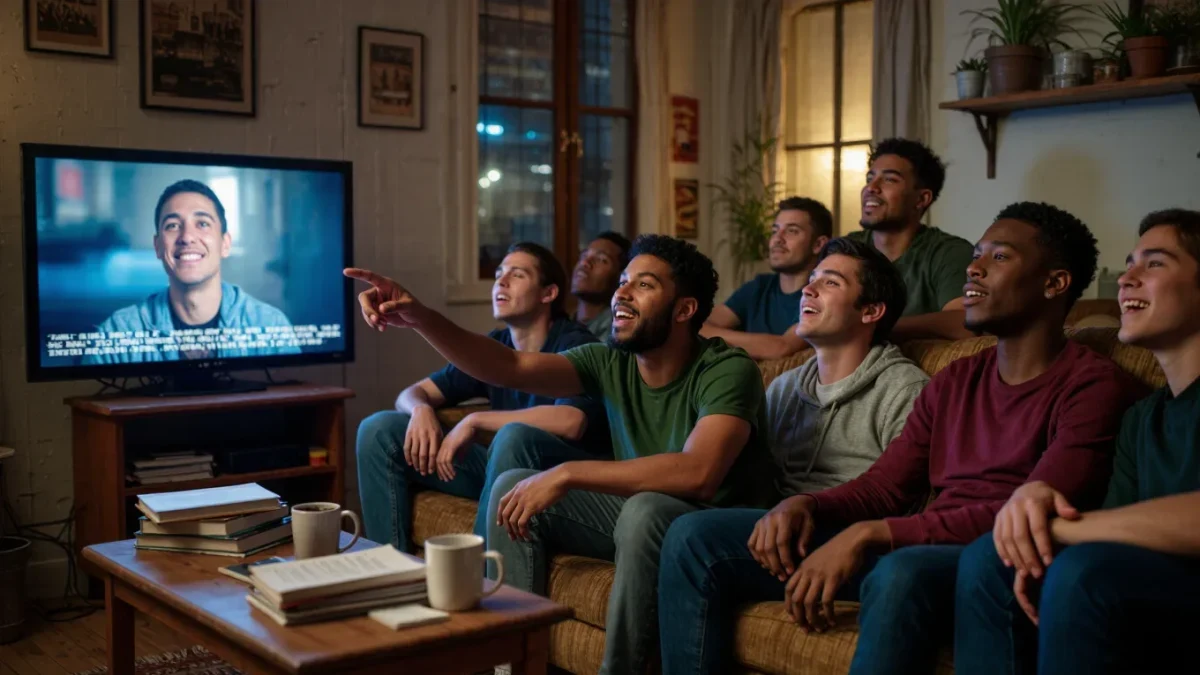
Live sports became network television's last moat because sports are the only mass-audience programming that resists everything streaming does well. A game cannot be binged, delayed, or spoiler-proofed; it must be watched live, at full attention, with commercials embedded in its structure rather than bolted on. As scripted series migrated to platforms, the rights to live sport became broadcast's remaining reason to exist at scale — the one product that still delivers enormous simultaneous audiences to advertisers, week after week, by appointment.
Why is live sport uniquely suited to broadcast?
Three properties, all structural. Simultaneity: a game's value decays within hours — highlights and scores are everywhere by morning — so live viewing is the product, and appointment viewing is the only delivery method. Scale: major sporting events remain among the very few programs that still gather audiences in the tens of millions in the United States at once, a number scripted television almost never reaches anymore. And advertiser integration: commercials are native to sport, breaking the action at defined stoppages rather than interrupting a story, which makes the ad load tolerable and the inventory premium. No other programming type offers all three. Award shows and news specials offer simultaneity but not weekly cadence; scripted series offer neither. Sport is the format broadcast was built for, and it took the industry half a century of everything else leaving to notice.
How did the moat form?
By subtraction, mostly, over the past two decades. Scripted prestige moved to cable, then to streamers. Reruns lost their value once catalogs lived on demand. Late-night and news fragmented across platforms and social video. Each migration removed one of broadcast's product lines, and what remained, increasingly, was sport — plus the reality and procedural formats that still perform on a live schedule. The networks' parent companies responded rationally: they invested in sports rights at escalating cost, because sport is the one content expenditure that reliably returns a mass live audience. The result is a business that has narrowed dramatically and, within that narrowing, become more defensible. A moat around a smaller castle is still a moat.
Why haven't streamers simply taken all the sports?
They have taken a lot of them, and the migration is real — major leagues have licensed packages to streaming platforms, and some marquee events now stream exclusively. But the migration is slower and more partial than the scripted exodus for economic reasons. Sports rights are the most expensive content in television, and leagues sell to whoever pays; the checkbooks now include technology companies with market capitalizations broadcast can only dream about. What keeps broadcast in the game is distribution: a national over-the-air signal reaches every household without a subscription, which maximizes the audience a league cares about and the advertisers will pay for. The equilibrium emerging is a split model — big tentpole events on broadcast, supplementary packages on streaming — with each side holding what it is structurally best at. The moat is no longer exclusive; it is shared, and taxed.
What does a sports-centered broadcast business look like?
- The primetime schedule anchors to football, the Olympics-scale event cycle, and playoff windows rather than scripted slates.
- Advertising shifts toward live-event inventory, priced at premiums scripted can no longer command.
- Affiliate and carriage relationships reorganize around which network holds which rights.
- Scripted programming survives in reduced, carefully scheduled pockets around the sports calendar.
- The networks' corporate parents hedge by putting sports on their own streaming services, splitting audiences between the moat and the subscription.
That last item is the strategy's central tension: the same conglomerates own the moat and the army crossing it.
Is the moat permanent?
Nothing in television is, and the honest read is that broadcast's sports advantage is a lease, not a deed. Streaming distribution now reaches the overwhelming majority of American households, latency and quality problems are largely solved, and younger viewing habits treat a subscription as the default front door. What broadcast retains is universality and habit — the antenna that reaches everyone, and decades of the audience learning where the game lives. Those are real advantages, eroding slowly. The deeper truth is that the moat metaphor flatters the networks slightly: sport did not stay because broadcast defended it; sport stayed because live mass reach was worth paying for while the checkbooks negotiated. The era in which that is exclusively true is ending. The era in which it is still mostly true is broadcast's remaining business — and, for now, its whole argument.
What did sports teach entertainment television by accident?
Scheduling, and the value of being unavoidable. For sixty years entertainment programming lived inside the tent sports pitched — the lead-in, the post-game show, the night the whole country stayed in because the game was on — and the entertainment business assumed the tent was furniture. The streaming era revealed it was the load-bearing pole. Sports does what no scripted show can: it happens at a specific time, its outcome is unknown to everyone including the people producing the broadcast, and its audience will not accept a delayed version. Every structural advantage the entertainment industry spent the 2010s dismantling — the weekly release, the shared moment, the appointment — sports still has natively, without trying. The comedy that now drops two episodes after the game, the drama marketed during halftime, the entire fall calendar: all of it is still living off the same rented real estate, and the rent keeps going up.
Can scripted television rebuild the live habit?
It keeps trying, mostly by borrowing the staging. Live event programming — the cast reunion, the live episode, the variety special, the awards show that trends for the wrong reasons — is entertainment's attempt to manufacture the urgency sports gets for free, and it works about as well as any imitation of a natural advantage works: occasionally, briefly, expensively. The deeper obstacle is that scripted drama's value is precisely its editability — the take, the cut, the year of post-production — and going live trades away everything the form is good at for a trivia question. The realistic future is the split that has already emerged: sports and competition formats own the calendar's live hours, while scripted content becomes a library people visit on their own schedules. That is not the death of the scripted show; it is the death of the assumption that scripted television was what television was for. The game was always the bigger room.