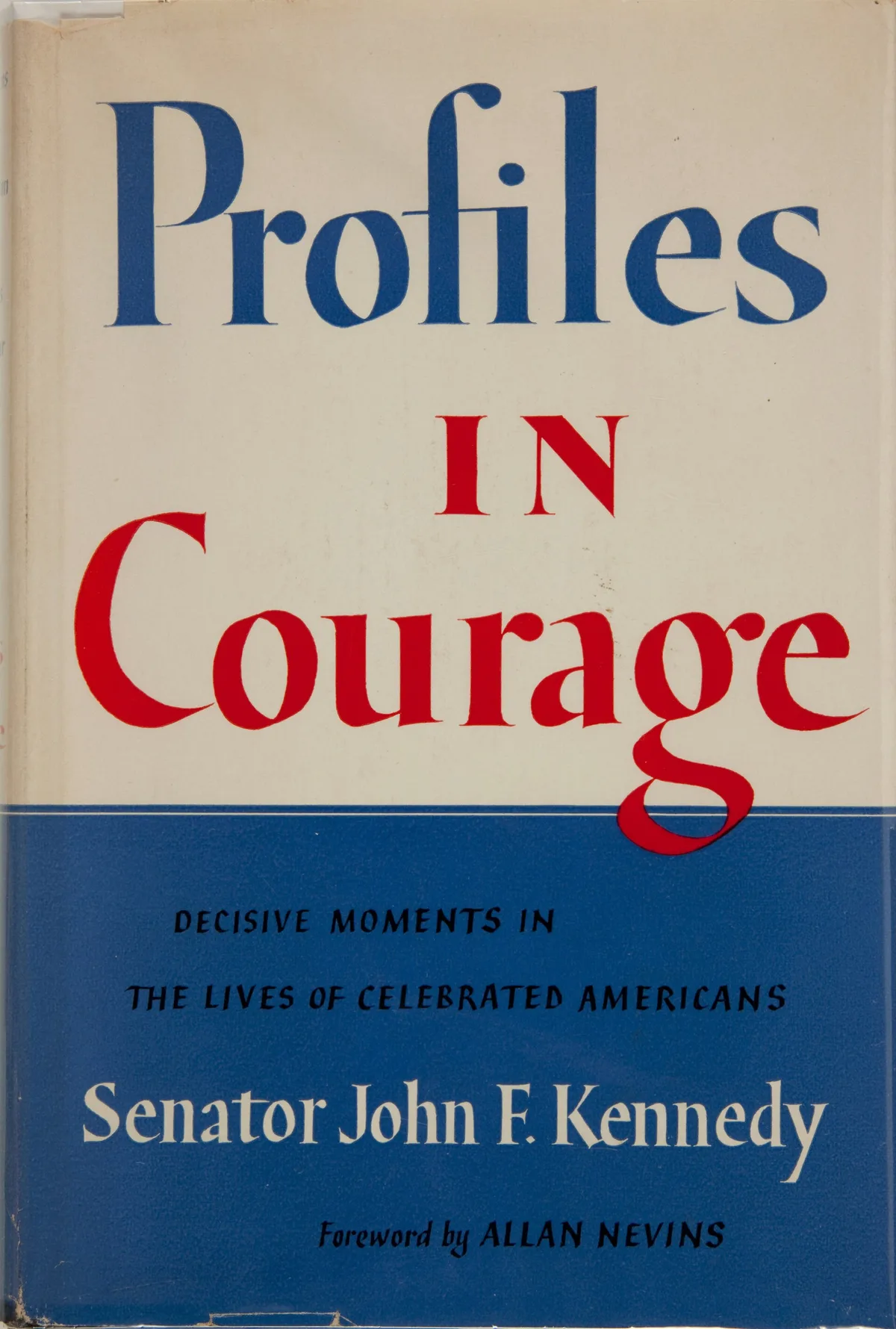
Profiles in Courage is a short book about long decisions. Published in the mid-1950s and credited to John F. Kennedy, it tells the stories of United States senators who took unpopular stands and paid for them politically. The book won the Pulitzer Prize for biography, and it did something rarer than win an award: it gave American politics a reusable idea of what courage looks like in public life.
The idea has proved more durable than any single profile in it. Half a century on, the phrase is shorthand for a specific kind of political act — the vote a legislator casts knowing it will cost him. That is a strange kind of immortality for a book, and the story of how it got that way, including a long-running argument about who actually wrote it, says a great deal about how political heroism gets manufactured. We covered a connected angle in Mara Brock Akil: The Showrunner Who Kept Black Stories on Network TV.
What is the book actually about?
The structure is simple to the point of severity. Kennedy profiles a handful of senators from different eras, each of whom risked or lost his career over a principled position. Some opposed party pressure. Some defended unpopular allies. Some took stands on questions, like regional compromise, that their constituents punished them for. The portraits are short, the stakes are spelled out, and each one ends the same way: the man loses, and the book asks the reader to consider whether losing was the point.
That framing was the innovation. Political biography before Profiles in Courage tended to celebrate winners. The book inverted the ledger, treating political defeat as evidence of character rather than proof of failure. It is a biographer's argument wearing a politician's clothes, and it landed at a moment when readers were primed for it.
Why did it hit so hard in the 1950s?
The book arrived in an America anxious about conformity. The postwar years had produced a national conversation about whether institutions, and the men inside them, had grown too cautious. A volume arguing that the Senate's finest hours came from dissent fit the mood precisely. It offered readers a gallery of counterexamples: men who stood alone and were vindicated, if not in their lifetimes, then in the historical record.
It also flattered the institution it chronicled. The Senate emerges from the book as a place where conscience has room to operate, which was a useful message from a sitting senator with ambitions. The commercial logic is hard to miss, and contemporaries did not miss it. The book built Kennedy's national reputation as a serious man of ideas at exactly the moment a serious man of ideas needed building.
Who really wrote it?
This is the question that shadows the book's reputation, and it is a fair one. Kennedy was a sitting senator with a punishing schedule and a bad back; the research and drafting involved a staff operation, most prominently his aide Ted Sorensen, who decades later acknowledged his central role in the writing. The publisher's original announcement credited Kennedy alone, and the discrepancy became a public controversy that historians have returned to ever since.
The honest answer sits between the extremes. Kennedy chose the theme, shaped the argument, and reviewed the work; Sorensen and others did a large share of the drafting; the book was a collaboration presented as an individual achievement. That pattern, a celebrity author fronting a staff-written text, was not unusual then and is not unusual now. What made this case famous was the prize attached to it, which raised the stakes of the authorship question from gossip to legacy.
Our analysis: the authorship debate matters less for what it says about one book than for what it reveals about the genre. Political books are often collective products marketed as personal testimony, and readers who understand that are better customers of the entire category.
How did the award change the book's meaning?
Winning the Pulitzer Prize for biography converted Profiles in Courage from a senator's side project into a fixture of American political culture. The award gave the book institutional endorsement, which is precisely what a book about institutional courage needed. It also invited scrutiny, because prizes attach standards, and the ghostwriting question was waiting when the scrutiny arrived.
There is an irony here worth sitting with. A book about men who accepted personal costs for their convictions was credited in a way that blurred who did the work. The controversy never fully dislodged the book from the canon, but it permanently complicated it. The volume now teaches two lessons at once: one about political bravery, and one about how credit flows toward the name on the cover.
Why does the phrase still carry weight?
Because it filled a gap in the political vocabulary. Before the book, English had words for physical bravery and wartime valor; it lacked a compact term for the specific courage of casting an unpopular vote. Profiles in Courage supplied one, and language keeps what it needs. The phrase now appears in award names, editorial endorsements, and obituaries, usually without quotation marks, which is the surest sign a book has stopped being a book and become a concept.
The concept has also been contested, which is another form of endurance. Critics over the years have asked whether every stand the book celebrates was as selfless as advertised, and whether the courage-of-conviction frame flatters a certain style of legislator while ignoring the quieter work of coalition-building. A phrase that people argue about is a phrase that stays alive.
What the book's afterlife teaches about profiles
The form Kennedy's team used, a compact portrait organized around a single defining decision, is now the default shape of political and professional profile writing everywhere, including the kind we practice in our own profiles coverage. Find the decision, state the cost, let the reader judge. Television writing does a version of the same thing when it frames a showrunner's career around one risky greenlight, the way we did with the total authorial control Mike White turned into HBO's most reliable Emmy machine. The template travels because it works: it turns a career into a story with a spine. For related coverage, see The One-Man Anthology: How Mike White Turned Total Authorial Control Into HBO's Most Reliable Emmy Machine.
What the evidence establishes is the book's reach and its contested authorship; what remains genuinely unknowable is how much of the prose was Kennedy's own hand. That uncertainty, kept honest, is part of the story rather than a flaw in it. A book about the costs of public conviction has spent decades paying its own, and the payment has kept it in print and in the argument. Very few books about politicians can say the same.