A profile readers remember does not come from access alone. It comes from a writer who knows what the piece is arguing before the first question is asked, gathers details with intent, and then builds a structure that keeps one idea moving from the first paragraph to the last. The good news is that this is craft, not luck, and craft can be learned.
This guide walks through the three stages that matter most: the reporting, the gathering of detail, and the writing itself. It is written for anyone tackling a longform character study, whether the subject is a showrunner, a stunt coordinator, or a costume designer nobody has thought to ask the right questions.
What is a profile, really?
A profile is an argument about a person, built from evidence you gathered yourself. That is the plainest definition, and it is the one that separates a memorable piece from a transcript with a headline. The argument might be that a casting director is the most underrated negotiator in television. It might be that a writer's early failures shaped everything she made later. Whatever it is, the argument decides what you report, what you quote, and what you cut.
That framing also solves the most common beginner problem: the shapeless profile that lists a subject's career in order, like a résumé with nicer sentences. Chronology is not structure. If your draft could survive being reordered without damage, it does not yet have an argument.
How do you prepare an interview that produces something?
Preparation is where profiles are won. Read everything the subject has already said on the record, then stop reading it. The goal is not to memorize old quotes; it is to find the questions nobody has asked. If a creator has answered the same origin story in twenty interviews, asking it a twenty-first time buys you nothing. The companion skill is covered in depth in The Profile Interview: How Reporters Get People to Open Up, but the core rule is simple: ask about process, not about opinions.
- Ask how a decision was made, not what the subject thinks of the result.
- Ask what a typical day looked like during a specific production, not in general.
- Ask what almost went wrong. Near-misses produce better stories than triumphs.
- Ask the same question twice, in different words, hours apart. The second answer is often the honest one.
Silence helps too. Most interviewers rush to fill a pause. A patient three seconds after an answer often earns the sentence the subject had decided not to say.
Where do the details that make a profile come from?
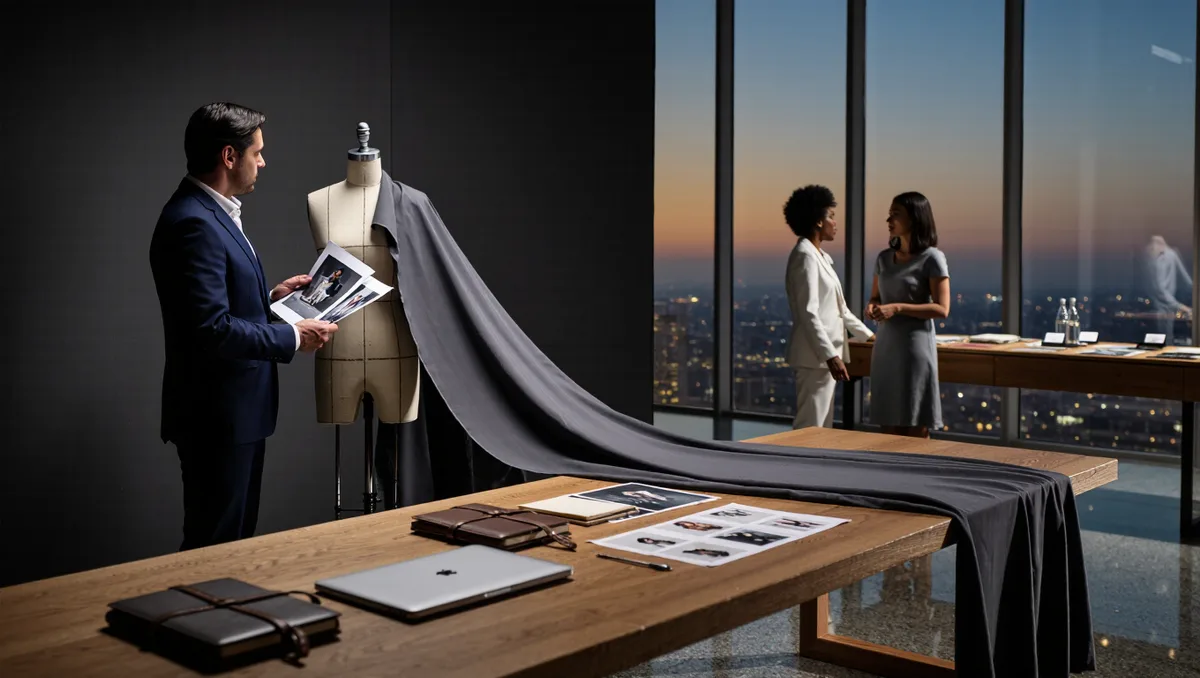
The best details are rarely spoken. They are observed: the way a subject answers a phone, the specific snack on the craft-services table, the fact that a costume designer keeps a swatch from a show that aired a decade ago. Observation is reporting, and it belongs in your notes with the same care as a quote.
This is where note-taking discipline pays off. Capture the exact wording of anything quotable, and mark clearly what you observed versus what you were told. A tool as plain as a browser notepad can carry the whole workflow; Online Notepad saves a draft every second through the browser's local storage, so a crashed tab does not take an afternoon of quotes with it, and its word counter lets you track how much material you are actually accumulating. The important habit is not which tool you use. It is writing everything down immediately, in the moment, rather than trusting memory to sort quotes from paraphrase later.
Environment matters as well. A quiet, simple writing space keeps attention on the material rather than the interface; Calmly Writer is a distraction-light online editor that shows a live word count and reading time as you draft. Whatever you draft in, draft fast and edit slow. First drafts exist to hold material, not to be good.
How should a profile be structured?
Most memorable profiles open with a scene or a telling detail, not with a career summary. The first paragraph should make a promise: here is the idea this piece will pursue. Then the body alternates between two kinds of material — narrative, which moves the reader through time or through a set, and reflection, which tells the reader what the material means. Neither works alone. All narrative reads like a diary; all reflection reads like an essay with nobody in it.
A workable shape for a 1,200-word profile:
- Open on a specific moment or detail that embodies the argument.
- Step back and state the subject's public record in two or three sentences, no more.
- Return to the subject speaking, on the question only you asked.
- Bring in a second voice or a second scene that complicates the first.
- Close by returning to the opening image, now carrying the weight of everything between.
The circular close is old and it works, but only if the opening image was chosen well. Choose an image that can absorb new meaning by the final paragraph.
What does the editing stage actually involve?
Editing a profile is mostly subtraction. Cut every sentence that restates the argument without advancing it. Cut quotes that say what your narration already says. Read the piece aloud; anywhere you stumble, the reader will too. Then check the three things that most often sink a draft: quotes that are too long, transitions that announce themselves, and an ending that summarizes instead of landing.
Language-level passes are where tools earn their place. DeepL Write offers spelling, grammar, and punctuation fixes along with word and sentence alternatives and adjustable tone, which makes it useful for the mechanical pass after the structural one. Use any such tool as a reader, not a co-writer: it can flag a flabby sentence, but only you know whether the sentence should exist at all.
One last check before you file: has the subject been allowed to be complicated? A profile that presents a flawless person is not a profile; it is a press release. Readers remember pieces where someone talented is also difficult, or someone charming is also evasive, because that is what people are like. Report the contradiction and let it stand.
What this means for your next profile
The craft here reduces to a short list. Know your argument before you pick up the phone. Ask about process. Write down everything, immediately, and mark what you observed. Structure around an idea, not a timeline. Edit by subtraction, then by sentence. And choose an opening image strong enough to close on.
None of this requires famous subjects. The same method produces a memorable portrait of a script supervisor or a location manager, and the pieces that do that job well are worth studying; our own Backstage Profiles: The Unsung Crews Behind Big Productions is one example of a profile that succeeds because it asks a working person real questions about real work. The subject changes. The craft does not.