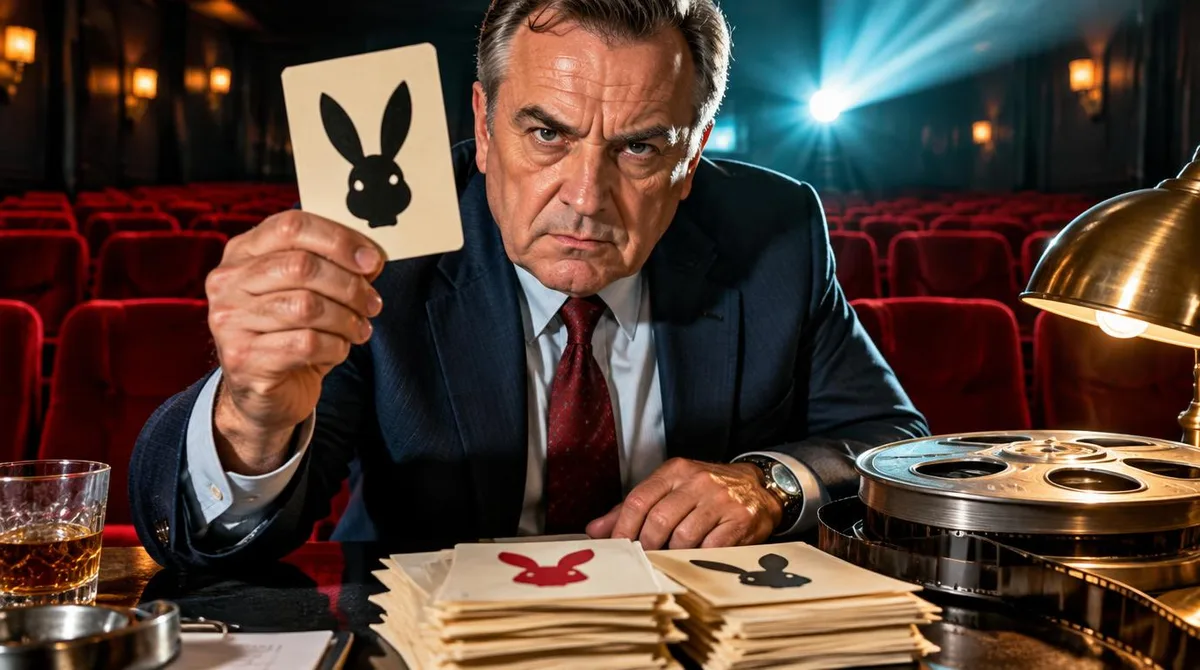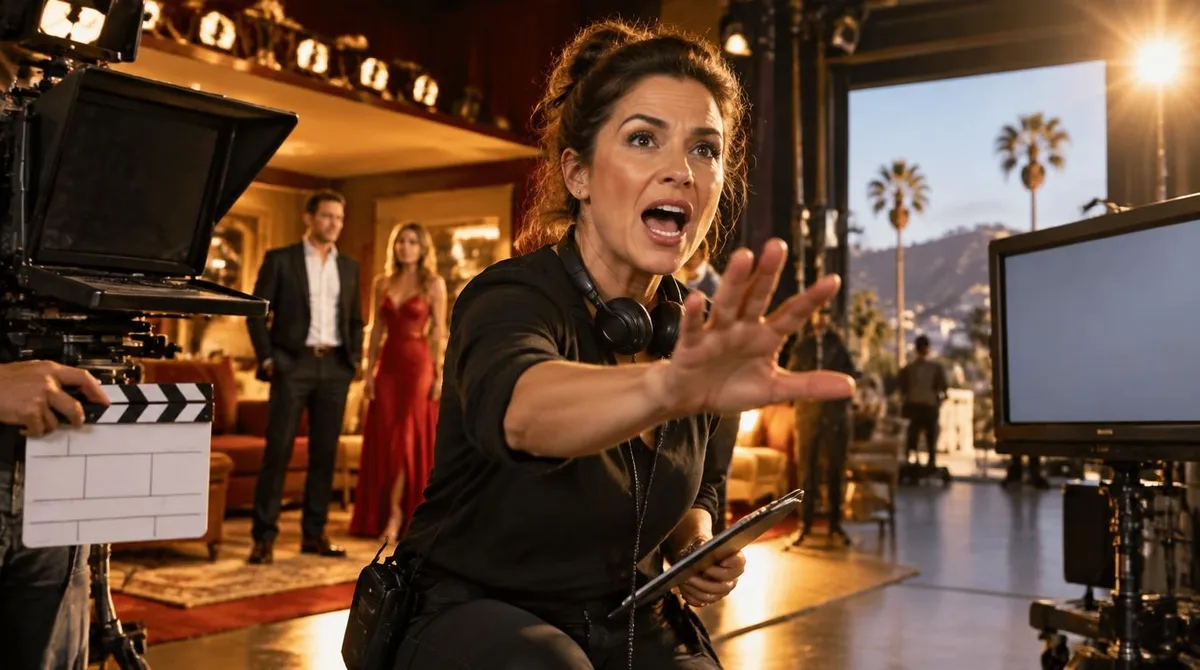
A TV pilot episode is a single hour of television made for one purpose: to convince a network that a whole series should exist around it. It is not episode one of a show. It is an audition, a proof of concept, and a business document wearing a drama's clothes. The odd part is that the entire system still works this way, even as streaming has loosened almost every other television convention.
The bet is strange on its face. A network commits real money, a cast, a crew, and months of development to an hour that may never air, may be reshot, or may be followed by nothing at all. The pilot exists because television is a serial business. A film stands or falls on its own. A series is a promise of dozens of future hours, and someone has to decide, before those hours exist, whether the promise is worth keeping.
Even the name is borrowed. In aviation, as Wikipedia notes, a pilot is the individual who controls an aircraft's flight — and the television pilot does something similar, steering a project from script toward series or into the discard pile. The metaphor fits because the stakes are the same: one person, one craft, one moment where everything either lifts off or doesn't.
Why do networks still order pilots at all?
Because a pilot answers questions a script cannot. A screenplay tells executives what a show intends to be. A pilot shows them what it actually is: how the leads perform, whether the tone holds for forty-plus minutes, whether the premise can generate a second story or quietly collapses after the first. Tone is the great untestable-on-paper quantity. Many premises read brilliantly and play flat, and the only way to find out is to shoot the thing.
Pilots also serve an internal political function. A greenlit pilot is a commitment small enough for executives to defend and large enough to signal seriousness. It creates a deadline, a budget, and a finished object that can be screened for advertisers, affiliates, and the people who control the schedule. In a business built on annual calendars — upfronts, launch windows, fall schedules — a pilot is the unit of progress everyone can point to.
How is a pilot different from a series episode?
A pilot carries freight no regular episode does. It must introduce a world, establish every major character, set the tone, and still tell a complete story — usually in the same hour. Series episodes get to assume the audience; the pilot has to win it. That is why pilots so often feel overloaded, and why the second episode of a good series frequently plays better than the first: the exposition tax has been paid.
Production-wise, the differences run deeper. A pilot is typically written by one person, the creator, and shot with a tightness of control that a season never enjoys. A series episode passes through a writers' room, a rotating set of directors, and the compromises of an ongoing schedule — the machinery described in How a Writers' Room Actually Works: From Mini-Room to Back Nine. The pilot is the one hour where the creator's hand is visible in nearly every frame, which is precisely why networks study it so closely: it is the clearest sample of what the show will be. Readers following this should also see How a Writers' Room Actually Works: From Mini-Room to Back Nine.
It is also usually the most expensive hour of a season relative to its length. Sets are built from scratch, casts are hired, and the whole apparatus spins up from zero. Later episodes amortize that infrastructure. The pilot pays for all of it at once.
What happens after a pilot is shot?
The finished pilot enters a screening season. Executives watch, take notes, and test the cut with audiences in some cases. The outcomes range along a spectrum: order a full series, order a reshoot or recast, retool the pilot entirely, or pass. A reshoot — replacing an actor, reworking a storyline, even re-shooting large portions with a new director — is common enough that it has its own lore in the industry. The pilot is treated as a draft of the show, not a finished episode of it.
Some pilots never air at all. Networks sometimes order a series and then ask for a new pilot, or scrap the original hour and fold its setup into the season's later episodes. The discarded pilot becomes an internal document, useful for casting and tone, never seen by the public. Our sibling piece on why networks greenlight shows that never air follows that stranger branch of the process; here, the point is simpler — the pilot's job is to be evaluated, not necessarily to be broadcast. We covered a connected angle in TV Pilot Episodes — The Pilot Episode Problem: Why Networks Greenlight Shows That Never Air.
What makes a pilot lead to renewal — or doom a show?
This is where the argument deserves its sharpest statement, and where honesty requires a qualification: no pilot determines a show's fate alone. Renewal decisions weigh audience measurement — the whole apparatus covered in how American television counts its audience now — along with cost, ownership, and scheduling fit. But the pilot shapes the conditions of that later judgment, and two patterns recur.
The first: pilots that overreach. A pilot stuffed with setup, mythology, and cliffhangers can win a series order on ambition and then strand the show, because it promised a story the series cannot sustainably tell. The audience arrives for the promise and leaves when the weekly episodes feel smaller than the preview. The second: pilots that undersell. A modest, well-made pilot can be passed over for a louder competitor, or ordered and then scheduled into a slot where its tone finds no audience. The pilot's quality and the show's fate are related, but the pipeline between them runs through a hundred business decisions the pilot never sees.
What this means for viewers is worth stating plainly. The pilot you watch is the survivor of a long elimination contest — one script among many, one shoot among possible reshoots, one cut among the versions executives considered. Its polish is real, but so is its compromise. The hour was made to persuade a room of decision-makers before it was made to please you, and the seams of that double audience show if you know where to look: the exposition delivered at speed, the tone calibrated to the network's brand, the ending engineered to make a series order feel inevitable.
Is the pilot dying as a format?
Streaming has attacked the pilot from several directions. Direct-to-series orders skip the pilot stage entirely, committing to a season on the strength of a script and talent attachments. Some shows shoot multiple pilots, or a longer first block of episodes, to blur the line between pilot and season. The economics of subscription television, where a library of hours matters more than a weekly schedule, arguably makes the single-hour audition less necessary than it was in the broadcast era.
Yet the pilot persists, because the problem it solves has not gone away. Someone still has to decide, before a season exists, whether a series idea works on screen — and the cheapest honest test of that remains shooting a sample hour. The format may bend: longer, fewer, folded into season one, ordered straight to series with a pilot-shaped first two episodes. The function survives. Television is still a business of promises made in advance, and the pilot episode is still the smallest object that makes a promise legible.
The takeaway, then, is not that pilots are sacred or obsolete. It is that they are a negotiation artifact — the point where creative ambition meets institutional risk, compressed into one hour. Watch one that way and it tells you as much about the business of television as about the show itself.