The bottle episode began as an accounting maneuver and ended up as a bragging right. Invented so productions could bank savings for expensive episodes later in the season, the format — one or two locations, the existing regular cast, no guest stars, no effects — was something shows once tried to disguise. Now series bill their bottle episodes in advance, critics single them out for awards, and audiences have learned to read the telltale signs of a single-set hour with anticipation rather than suspicion. No other television format has traveled from the production office's cost column to the marketing department's highlight reel.
What is a bottle episode, exactly?
It is an episode produced under deliberate constraint: confined to preexisting standing sets, using the regular cast almost exclusively, with minimal guest actors, stunts, or visual effects. The name comes from the idea of a ship in a bottle — a closed world, sealed off from the series' usual sprawl. On a conventional network order of twenty-plus episodes, a bottle hour was a hedge against the budget: shoot cheap in week nine so week twenty's climactic set piece lands. The constraint was industrial, and the craft came later, when writers realized that stripping away location and spectacle left nothing to hide behind. Dialogue, performance, and structure had to carry an entire hour, and the writers who could do that tended to be the ones worth watching anyway.
Why did networks and studios love them?
Because television is a delivery schedule before it is an art form, and schedules need cheap weeks. An episodic season is a marathon of production math, with each episode's budget negotiated against the season's total. A bottle episode functions as a savings account: the money not spent on company moves, location fees, and crowd scenes gets reallocated to the episodes the season is sold on. The audience was never supposed to notice. That is the piquant part of the format's history — the whole point was invisibility, and the format's eventual prestige comes from the audience learning to see precisely what it was never meant to see.
When did the bottle episode become prestigious?
The turn came with prestige drama, and especially with serialized shows that could sell confinement as dramatic intention rather than budget necessity. A single-location hour in a long season read as cheap; the same hour in a tightly plotted eight-episode run read as a formal statement — an argument that the series trusted its characters enough to lock them in a room. Comedy made the same discovery earlier and more quietly: the locked-room sitcom episode, the road-trip-in-one-car episode, the episode that never leaves the apartment. In both registers, the bottle episode became a proof of material. If the writing worked under constraint, the show was real; if it sagged, no set budget could have saved it.
How can you spot one as a viewer?
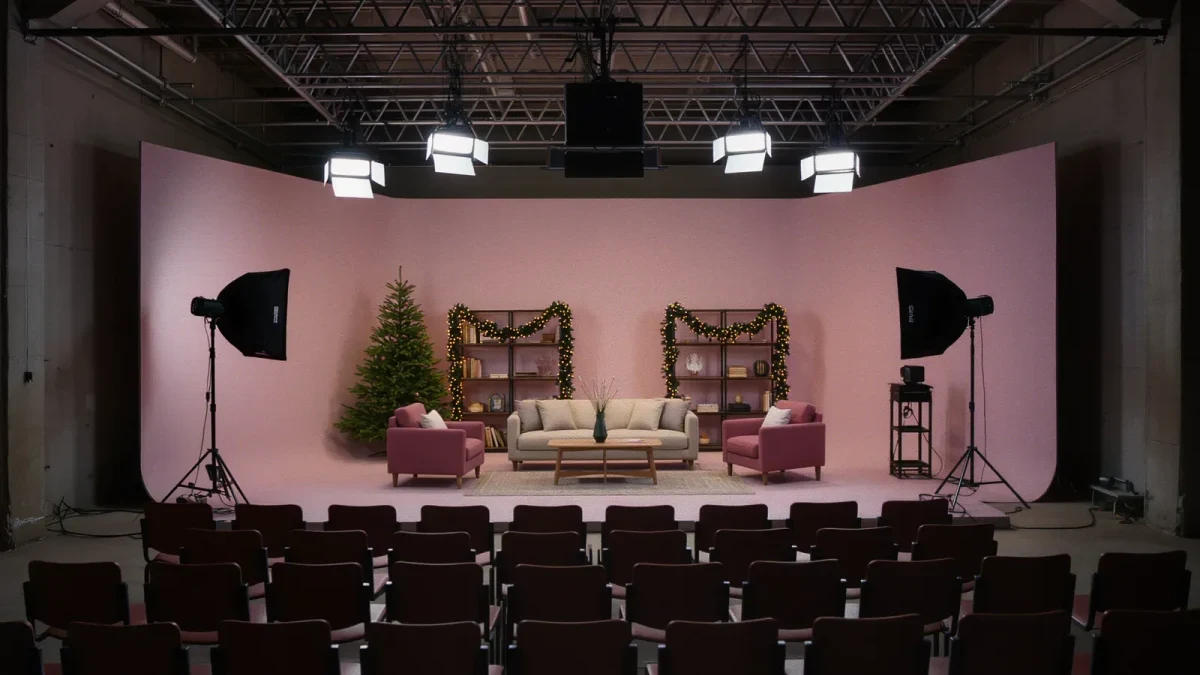
- The episode stays in two or three familiar locations, nearly all of them standing sets the show already owns.
- No new guest cast of consequence — the regulars, and perhaps one trapped visitor.
- A pressure-cooker premise: characters forced into confrontation because there is nowhere else to go.
- An unusually talky, theatrical rhythm, closer to a stage play than a location shoot.
- Directing that leans on blocking, long takes, and performance rather than coverage of new spaces.
None of these signs is a confession of poverty anymore. They function more like a genre tag — a promise that the next hour will be about people rather than logistics.
Why does the format survive in the streaming era?
Streaming shortened seasons and inflated per-episode budgets, which should have killed the bottle episode by removing the scarcity it was invented to manage. Instead the format survived by changing its job. Short seasons made every episode a marketing event, and a constrained hour became a distinguishable event — something a show can be discussed around. There is also a craft-economics logic that never went away: even lavishly funded productions hit the wall of scheduling, location availability, and actor contracts, and a designed-from-the-start bottle episode solves more production problems than any money can. The format persists because constraint is the one resource television never runs out of.
The bottle episode's arc is the cleanest parable in television about the relationship between limits and craft. What began as the line item a showrunner hoped nobody would question became the episode a series uses to prove it can actually write. The industry spent decades disguising its cheapest hours. It now puts them in the trailer.
Why do fans hunt for bottle episodes?
Because a bottle episode is the show with the furniture removed, and audiences have learned to read that as a dare. Two characters who have been circling each other for twenty episodes suddenly get locked in a room with nothing to do but talk, and the entire budget of the series — the crowds, the locations, the explosions — turns out to have been scaffolding around that conversation. Fan communities keep informal lists of them the way film buffs track long takes: as proof of craft under constraint. There is also a contrarian pleasure in loving the cheap one. Any show can spend money; only a confident one stops spending it on purpose.
Is the streaming era killing the format?
In theory it should have — a service that drops eight episodes at once has no production bottleneck forcing a cheap hour, and no weekly schedule needing a breather before a finale. In practice the bottle episode survived by rebranding as prestige. Limited series now build their entire middle around a single-location hour, and writers discovered that confining characters in episode three or four pays off across a binge the way it once paid off across a season. The economics changed; the dramatic math didn't. Put people in a room, take away the exits, and something true eventually gets said — that rule predates television and will outlast whatever television becomes next.