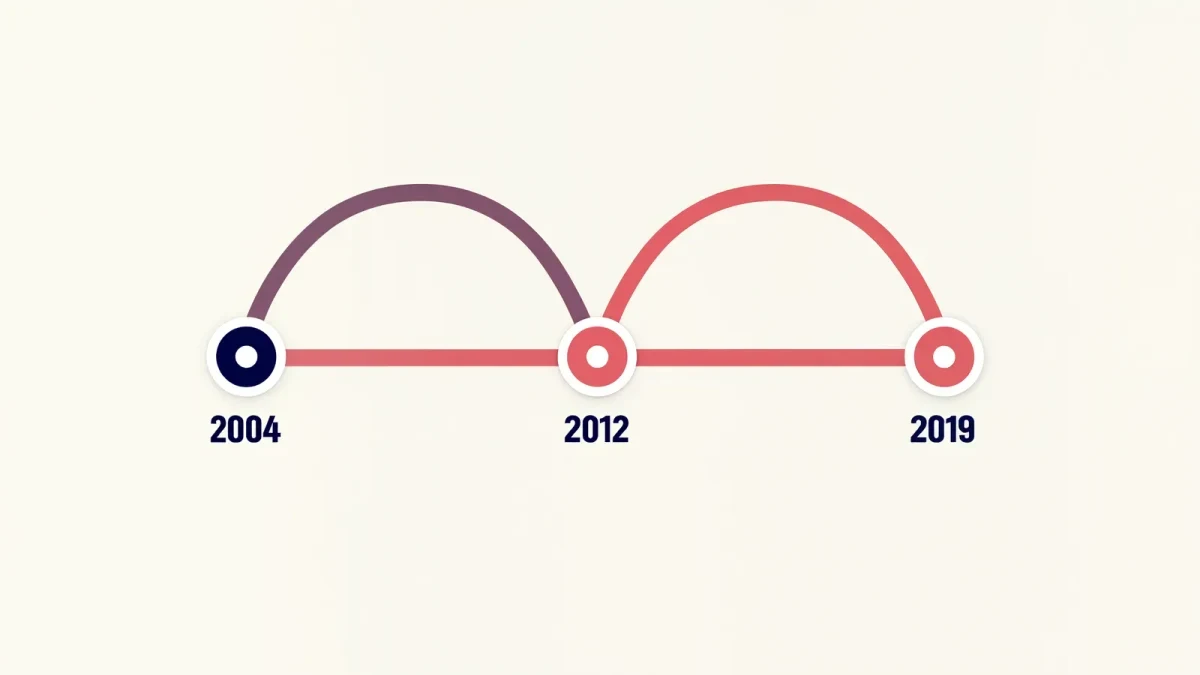
Damon Lindelof is the showrunner the medium uses to argue with itself about endings. Lost, which he co-created and ran from 2004 to 2010, remains the most debated finale in television history; The Leftovers, his 2014-2017 HBO series about grief after an unexplained departure, is now a canon touchstone; and Watchmen, his 2019 adaptation of the graphic novel, won the Emmy for Outstanding Limited Series in 2020. Three shows, three registers, one preoccupation: what audiences are owed by a mystery.
What did Lost actually establish?
The business model of modern television. Co-created with J. J. Abrams and run by Lindelof with Carlton Cuse, Lost premiered on ABC in 2004 and turned a castaway mystery into a global phenomenon — the last network drama to be a genuinely mass international event, with finale-night viewing parties and simultaneous global broadcasts. It also invented, for better and worse, the mechanics the streaming era runs on: serialized mythology demanding week-to-week theorizing, an ensemble flashback architecture, and a fan discourse ecosystem that grew up around the show's puzzles. By its sixth season the series had negotiated an end date with ABC, a then-radical move now standard practice — shows asking for final-season certainty is Lindelof's enduring structural gift to the medium.
The 2010 finale, deliberately spiritual where the audience expected procedural, split viewership into camps that have not reconciled in sixteen years of rewatch podcasts, which is itself the point: Lost is the founding text of the rewatch economy, and every argument about whether the island explained itself is an argument about what Lindelof owes his audience.
Why did he move to film, and why did it hurt?
Because the film business wanted his puzzle instincts without his patience. Lindelof wrote or co-wrote a run of major studio features in the 2010s — Cowboys & Aliens, Prometheus, Star Trek Into Darkness, and Tomorrowland — and became, fairly or not, the internet's shorthand for the ambiguous tent-pole ending. His public reflections on that period, including widely read interviews about the toll of online criticism, frame the exit: he returned to television and to HBO, where ambiguity is a genre rather than a liability.
What made The Leftovers the critics' pick?
Ruthlessness about premise. Adapted with Tom Perrotta from Perrotta's novel, The Leftovers begins after two percent of the world's population has vanished without explanation — and then refuses, across three seasons, to explain the departure, converting the mystery into a study of how the survivors build meaning from a hole in the world. Ratings were modest; critical standing was total, with the third season landing on numerous best-of-the-decade lists and Carrie Coon and Justin Theroux's performances entering the permanent argument. The show also reframed its author: the man accused of unsolvable mystery on Lost delivered a masterpiece precisely by withholding solution on purpose, and the rewatch crowd's consensus migrated accordingly.
How did Watchmen settle the argument?
By winning it in public. Lindelof's 2019 HBO series took Alan Moore and Dave Gibbons's graphic novel not as canon to remount but as a foundation for a sequel about race, policing, and American memory, set in Tulsa and anchored by Regina King and Jean Smart. The academy awarded it the Outstanding Limited Series Emmy in 2020, among a haul that made it the most-honored show of that ceremony's year; audiences argued about its ending too, but this time the argument came with trophies. Structurally it proved the Lindelof thesis at scale: adaptation as conversation rather than fidelity, mystery as moral instrument rather than plot mechanic.
What is the Lindelof method worth keeping?
Three disciplines. Negotiate your ending early — the fixed end date saved Lost from the open-ended drift that killed so many mythology dramas, and the industry adopted it. Let the mystery be about the people — The Leftovers and Watchmen both treat the unexplained as pressure on character, never as content. And engage the audience as a participant — Lindelof's public self-interrogation, from interviews to the meta-commentary baked into his shows, made the showrunner a visible, accountable author at the exact moment social media made the audience a co-author it never asked to be.
His post-Watchmen years have been selective — development announced, debated, and not hurried, plus producing credits — which suits the record: a career built on the argument that scarcity of answer beats abundance of episode. Every mystery box shipped since, every limited series with a hard stop and a thematic spine, owes his argument a debt, and every viewer still fighting about that church in 2010 is proof the interest never stopped compounding.
Why do his endings get debated more than his middles?
Because his shows are explicitly about the obligation to pay off, and audiences took that personally. A Lindelof series front-loads mystery with a kind of promissory confidence — islands, raptures, disappearances, the intimate aftermath of impossible events — and the questions are posed so formally, so often, that the audience begins to believe the show has an answer key it is withholding. His career-long argument, restated in each series, is that the answers were never the point; the characters' responses to the unanswerable were. Plenty of viewers accept that framing on rewatch, when the pressure to solve the thing has lifted and the character work can be seen doing what it was always doing. Plenty never will, and the disagreement is itself the product: a body of work whose meaning is negotiated in public, at length, forever. In a business that engineers shows to be consumed and forgotten, engineering one to be argued about is not a failure of craft. It is a different craft, and it is the one he practices.
What did the rewatch economy change for him specifically?
It moved the verdict. Serialized mystery in the broadcast era was judged once, in real time, by an audience racing the finale to air; the streaming library made the complete series available as a single object, binged in a week, and the shows that suffered most in weekly translation — the ones whose questions festered between episodes for years — suddenly played at their intended density. At the same time, the podcast-and-essay apparatus that grew up around rewatches provided something his work had always lacked in real time: a companion literature, episode-by-episode breakdowns that treated the shows as texts with arguments rather than puzzles with keys. The result is that his reputation is now two things at once — the showrunner whose endings broke the live audience's heart, and the showrunner whose complete series reward exactly the kind of obsessive, second-pass attention the modern audience was just learning to give. Both reputations are earned. That they contradict each other is, fittingly, the most Lindelof outcome available.