The movie musical is back because streaming platforms needed what musicals uniquely supply: pre-sold songs, family co-viewing, and repeat viewing that functions like a soundtrack on shuffle. The form spent forty years being declared commercially extinct, surviving as animation's side business and the occasional awards-season long shot. Then a subtitled Korean drama's musical moments, a string of stage adaptations, and one two-part witch blockbuster reorganized the arithmetic, and by the mid-2020s the musical was again something studios greenlit on purpose. The comeback is real, and its causes are almost entirely televisual — which is why it belongs in a television magazine.
What follows is format and business analysis from the public record; no invented figures, and the wit is aimed at the genre's habits, which have earned it.
Why did the movie musical die in the first place?
Because its economics were enormous and its audience narrowed. The golden-age musical was one of the studio system's signature products, but as the system dissolved in the 1960s, the form's costs — orchestras, ensembles, sets, and roadshow releases — met a culture turning toward realism, and the misses got catastrophic while the hits got rarer. The genre retreated to animation, where characters could plausibly sing, and to adaptation: stage hits bankrolled as films, with the stage hit doing the market research the studio no longer trusted itself to do. For decades the live-action musical survived the way certain animals survive winters — rarely, and mostly on Broadway's body fat. The form's intermittency became a running industry joke: every decade produced one surprise hit that prompted three imitators that flopped, which re-killed the genre, which was then resurrected again a decade later by another surprise hit. The cycle was so reliable it should have had a Nielsen rating of its own.
What did streaming change?
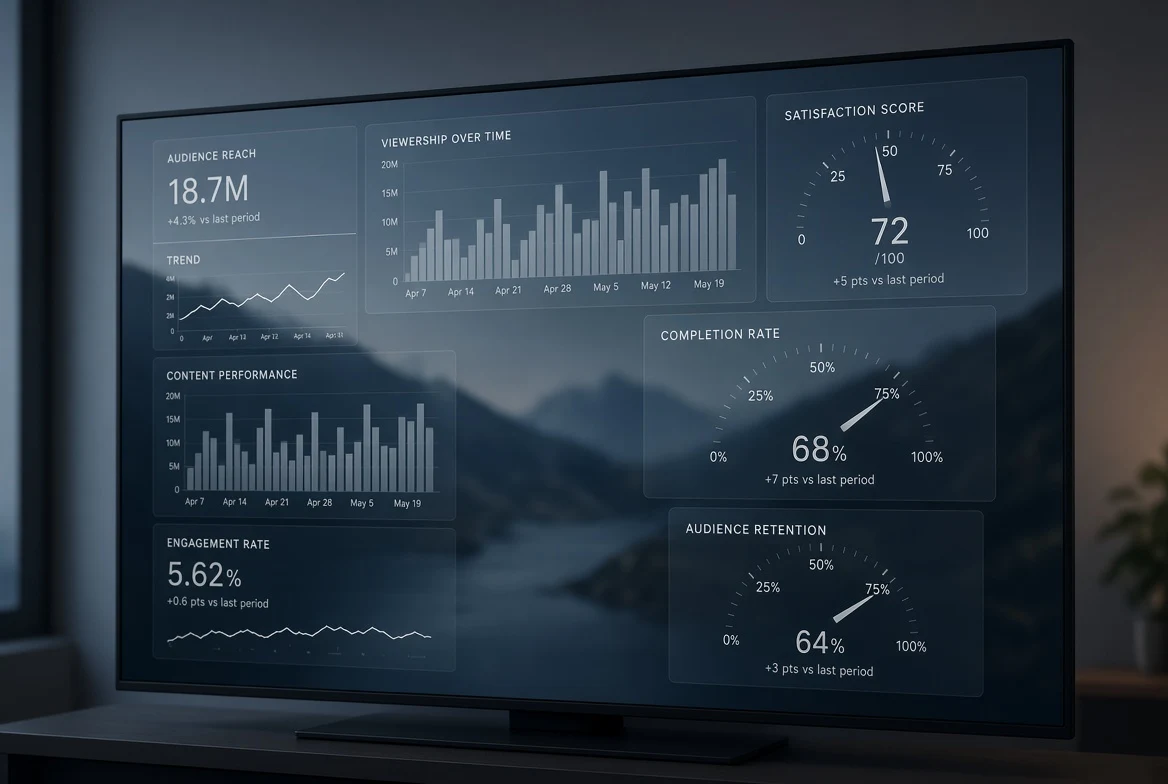
The demand signal. A streamer can see, in its own engagement data, how catalog musicals perform over time — the sing-along rewatch factor, the household co-viewing, the December spike — and unlike a 1970 studio it does not need a theatrical opening weekend to amortize the gamble. That is why so much of the musical revival happened on the small screen first: filmed stage productions, jukebox musicals, and original movie-musicals commissioned as platform brand events, forms that would have been unfundable theatrically. The global dimension mattered just as much. Musical performance travels better than dialogue-driven comedy; a song does not lose its joke in translation, and international audiences, as coverage of global streaming trends at BBC Culture has repeatedly noted, have repeatedly rescued formats American studios had written off. Theatrical then re-entered the picture, as stage adaptations and event-scale fantasy musicals proved the big-screen version of the form could still open — a proof delivered so emphatically in the mid-2020s that the industry briefly resembled its 1960 self, greenlighting musicals in multiples.
Is the comeback creative or just commercial?
Mostly commercial, with real creative dividends the industry keeps fumbling. The awkward truth of the revival is that some of its biggest successes were marketed while hiding that they were musicals at all — trailers cutting around the songs, as though the genre were an embarrassing relative — while the successes that embraced the form outright were rewarded with the exact multigenerational, repeat-viewing audience the marketing department was afraid of losing. The commercial logic of the musical is repeat attendance; the creative logic is that audiences who know the songs before they buy the ticket are the cheapest marketing a studio can buy; and the two logics point the same direction, which the industry notices only intermittently, in the way it notices all obvious things.
What does the comeback look like on television specifically?
Like a parallel industry. Beyond the platform-commissioned films, the streaming era rebuilt musical culture out of adjacent formats: filmed stage productions that put full Broadway and West End shows into living rooms at a fraction of a ticket's price; music-documentary series whose soundtracks function as cast albums; and competition and youth series that normalize characters breaking into song for audiences too young to have absorbed the genre's stigma. Live television musicals — the once-a-year broadcast events that networks used as appointment-programming experiments — taught the industry something unexpected: audiences showed up partly to watch the productions wobble, turning a format into a participatory event decades before social feeds formalized the second screen. Each of these strands feeds the others. The filmed stage production creates the soundtrack; the soundtrack streams; the streaming numbers justify the next filmed production. The musical, of all genres, turns out to be perfectly shaped for platforms, because a musical is the rare film format whose value compounds — songs outlive scenes, and every listen is an engagement minute the platform did not have to commission. The comeback is not a nostalgia cycle. It is a format discovering it was built for the distribution model all along.
Will it last this time?
The format's history says the boom produces overproduction, the overproduction produces flops, and the flops produce the next obituary. But the streaming-era difference is structural: a platform musical that underperforms in its launch window keeps selling the platform for years, because the form's value is in rewatchability rather than opening. That changes the downside case enough that the musical is unlikely to vanish again the way it did in 1970 — the couch is more forgiving than the multiplex. What audiences can reliably expect is the genre's eternal rhythm: a few genuinely inspired entries, a larger number of calculated ones, and a marketing apparatus still occasionally ashamed of its own product. The musical never really needed rescuing. It needed a distribution model that valued people singing the same songs twice, and it finally got one.