The film-to-series pipeline exists because in the streaming era a movie library is not an archive — it is a development slate with the marketing pre-paid. When a platform announces a series based on a decades-old film, the decision was made by acquisition math: an original premise costs the same to produce as a familiar one, but the familiar one arrives with name recognition, a testable logline, and an algorithm's worth of data showing which catalog titles subscribers already watch. Studios mine their vaults for shows because the vault is the only part of the business where awareness is free. The pipeline is the industry's most reliable current strategy, and like most reliable strategies, it is 20% inspiration and 80% depreciation accounting.
This is a business-of-television explainer built on the public record of announcements and renewals; the individual series involved illustrate the pattern, and the pattern — not any executive — is the target.
How does a film title become a series, mechanically?
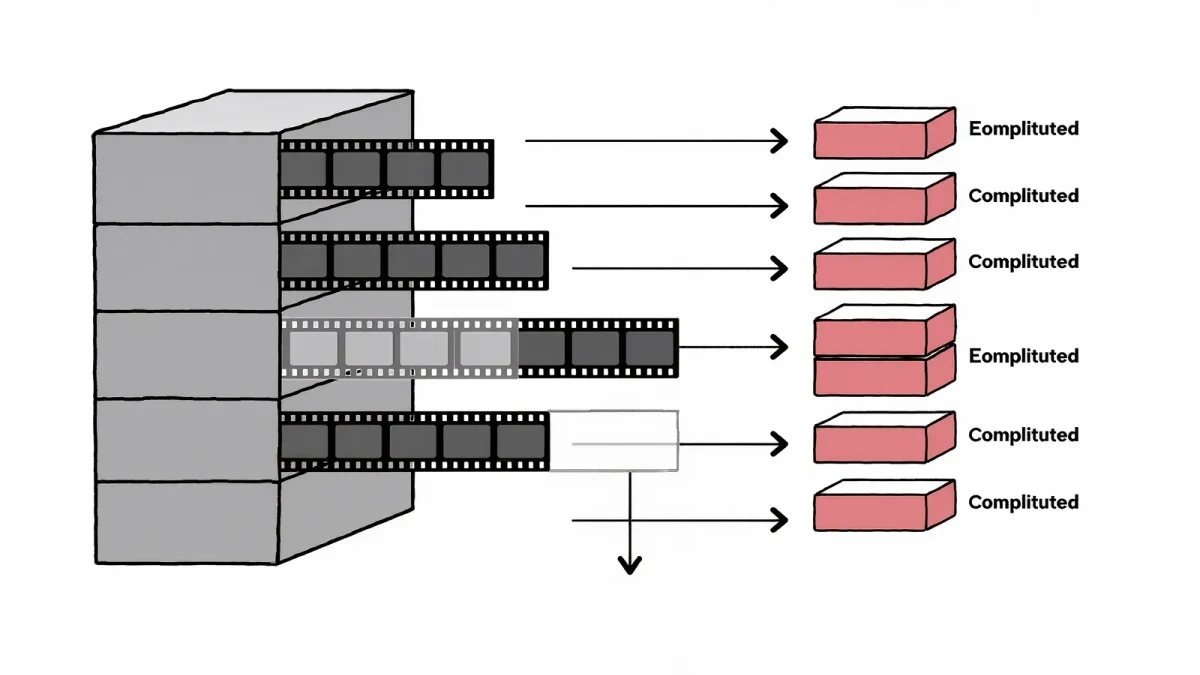
Through a deal chain the audience never sees. A studio that owns a film controls the series rights unless it licensed them away decades ago — a wrinkle that has caused famous standoffs, including disputes over franchise television rights that surfaced during the corporate consolidation wave of the 2010s and 2020s, consolidation tracked throughout by Bloomberg Media. Once the rights sit inside the corporate family, the catalog title gets evaluated like a prospect: how many households watched the film on the platform last quarter, does the premise serialize, is the original cast available or affordable, and does the brand support an event launch or merely library depth. Most vault adaptations are commissioned for the second purpose — quiet library replenishment that keeps the service feeling new — while a handful per year get the event treatment: a marquee title, a known showrunner, a budget the original film would envy, and a global premiere date. The two tiers look identical in a press release and are entirely different businesses underneath.
Why did the pipeline get so big in the streaming era?
Because launch costs became the industry's biggest problem. A streaming service must produce a steady volume of originals to justify a subscription, and every unknown quantity carries the full burden of building awareness from nothing; a vault title borrows against decades of it. Vertical integration did the rest. As studios pulled their film libraries back from licensed platforms to stock their own services in the late 2010s, each catalog became a moat, and a moat full of recognized names is best exploited by turning the names into series. The rights-clearing wave that preceded the consolidation — studios re-securing lapsed sequel and series rights to their own franchises — was the tell: companies were buying back the right to extend properties they already owned, years before announcing the extensions. Nothing in that sentence involves a story idea. That is the point.
Does the pipeline produce good television?
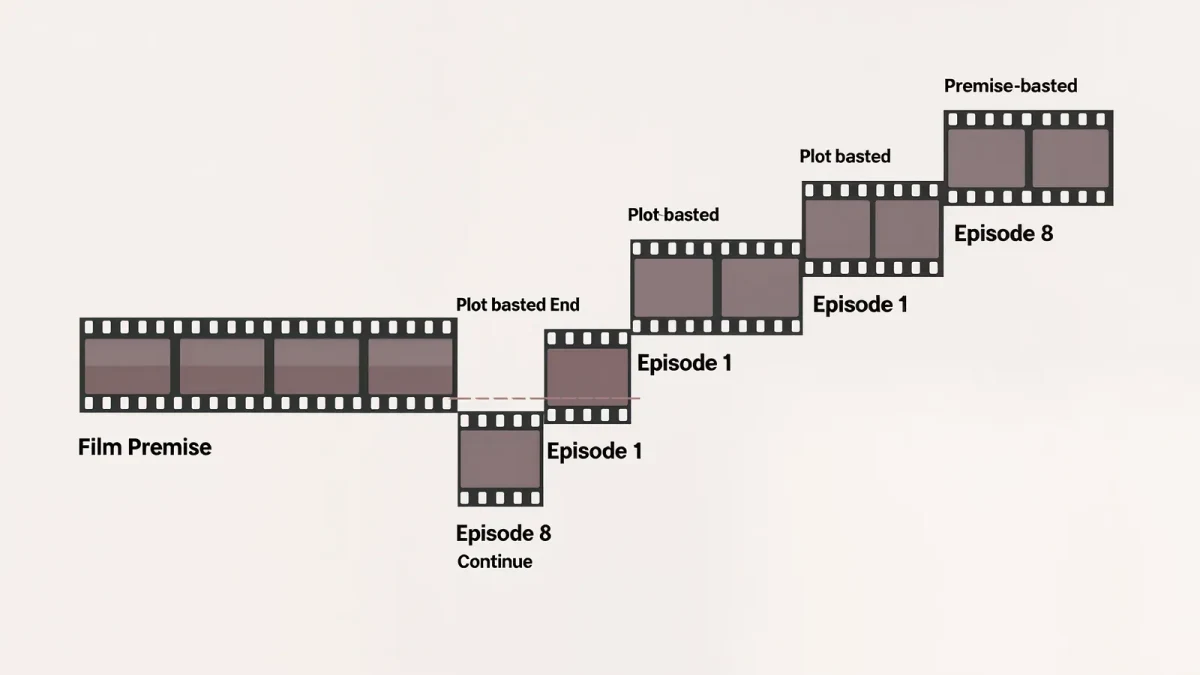
Unevenly, and the variance follows a legible rule. The vault adaptations that work are premise-mining — the series takes a film's world or conceit and builds television-native stories, as with a certain Minnesota-set crime anthology that became one of the decade's most acclaimed series, or a horror franchise extension that kept only the mythology. The ones that fail are title-licensing: shows that borrow the name, replay the plot beats, and discover that nostalgia is a one-episode fuel. The pipeline itself is neutral — it delivers scale, not quality — but its incentives tilt toward the title-licensing end, because the whole reason the strategy exists is the name, and the name is the part of the source least useful to a writers' room. The best vault adaptations are the ones where the title is the least interesting thing about them, which is a strange sentence to write about a strategy built entirely on titles.
Which studios have leaned on the pipeline hardest?
The ones with the deepest catalogs and the thinnest original-development slates — which, after the consolidation wave, describes nearly every major studio. The pattern shows up in each company's output differently. Legacy film studios with decades of library titles treated the vault as their streaming services' launch fuel, announcing series extensions of action, horror, and comedy franchises at a pace that made the film catalog read like a five-year plan. The newest Hollywood player took the opposite route, commissioning original series and buying occasional IP, betting that a subscriber joins for what only exists in one place. Both strategies have since converged toward the middle, because both discovered the same limit: a catalog title lowers a show's launch cost but not its production cost, and the pipeline only pays when the show underneath the name works. The studios that leaned hardest on vault mining have also canceled the most vault adaptations, and the cancelations are instructive in a way the announcements never are — a familiar title buys a premiere, but only the series buys a renewal. The pipeline, run without craft, is just an expensive way to remind audiences of better things.
Is the pipeline sustainable, or is the vault running dry?
The vault is deeper than skeptics assume, because mining has two passes: first the beloved classics, then the cult favorites, the mid-tier genre titles, and the flops with good premises — a stage the industry has visibly entered, announcing series based on properties whose original audiences were statistically negligible. The real limit is not inventory but attention: each year brings more platforms, more series, and the same number of household-hours, so the value of any single familiar title dilutes. The pipeline's endgame is not exhaustion but merger with ordinary development — a future in which 'based on the film' is a normal option alongside 'based on the podcast' and 'based on the article,' one provenance among many rather than a strategy. Until then, the mining continues, the press releases keep arriving, and somewhere a studio executive is reading a spreadsheet of 1980s thrillers, looking for the next one that can carry eight episodes. The premise was never the constraint. The premise was never even the question.