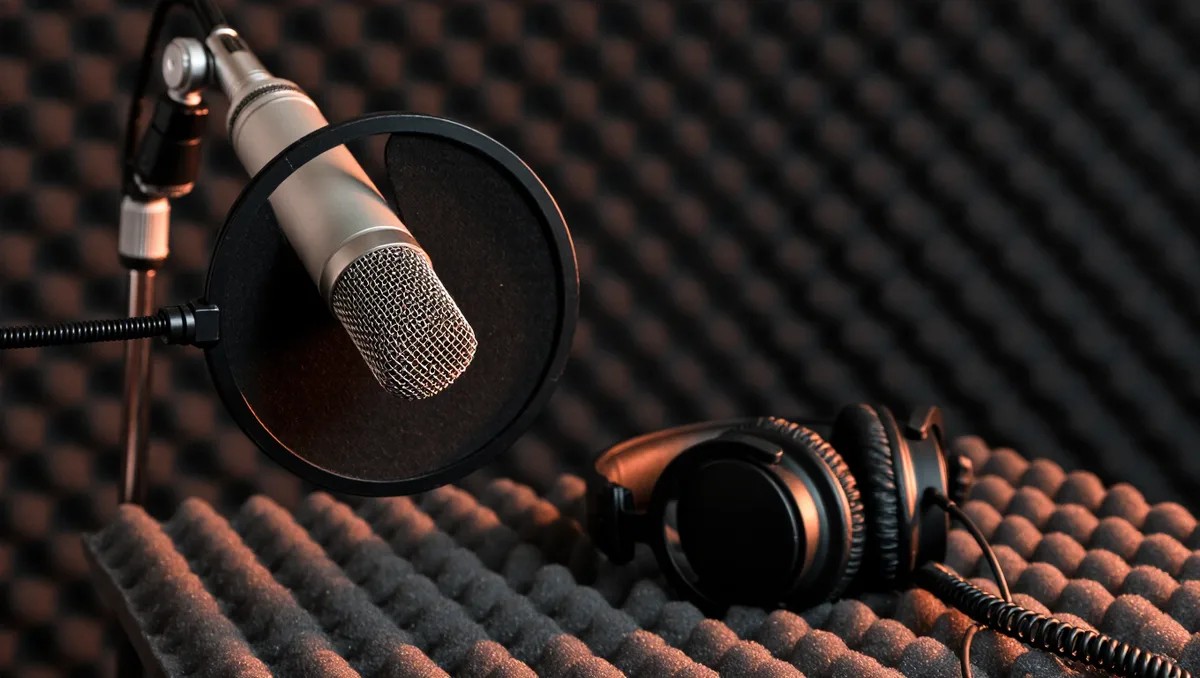
The whisper interview has arrived as a genuine publicity staple, and it works by inverting everything the promotional circuit was built to do. Instead of a bright studio, a timed desk, and a host steering toward the next project, the celebrity ASMR video puts a famous face in a quiet room with a microphone and asks for almost nothing. That near-nothing is the product.
The commercial logic is simple once you stop treating these clips as oddities. A press tour generates hundreds of interchangeable interviews; a whisper video generates one artifact that behaves like content rather than coverage. It gets clipped, looped, and shared on its own terms, and it reaches an audience that never watches a talk show. The format is less a conversation than a manufactured object, and publicity teams have learned to manufacture it on schedule.
For readers who came up through the celebrity beat the old way, the shift is worth taking seriously, because it says something about where attention actually lives now.
What is ASMR, and why did it end up next to a movie poster?
ASMR stands for autonomous sensory meridian response, a term borrowed from online communities to describe a tingling, calming sensation some people feel in response to soft sounds: whispering, tapping, slow hand movements. It began as a niche of homemade videos made by and for enthusiasts. The production values were low and the intent was sincere, which matters, because sincerity is precisely what the celebrity version borrows without fully possessing.
When a promotional team books a whisper interview, it is renting that borrowed calm. The famous guest whispers about a film or a show, crinkles a prop, taps a coffee cup, and the clip lands in feeds engineered to reward quiet. The viewer arrives for the tingle and stays for the star. Nobody in the room has to say the word marketing.
Why does the format work so well as promotion?
The answer is structural. Traditional press is built on scarcity of access: a fixed number of desks, a fixed number of minutes, a quote that gets flattened into the same paragraph everywhere. The whisper format abandons scarcity for texture. It produces something visually and sonically distinct, which algorithms treat as novel and audiences treat as intimate, even though it is neither. The intimacy is staged; the novelty is a microphone choice.
There is also a control benefit that any publicist would recognize immediately. A celebrity ASMR segment has almost no room for an unscripted moment. There is no follow-up question, no pivot to a sensitive topic, no accidental headline. The guest reads prompts, makes soft sounds, and leaves. Compare that with the gauntlet of a conventional junket, where the risks are well documented, and the appeal to a cautious publicity operation becomes obvious. This is the same instinct that sends actors toward controlled short appearances over open-ended commitments, the calculus we traced in Guest Star or Series Regular: Why Actors Choose Short Arcs Over Long Commitments. Low exposure, predictable output, brand intact. Readers following this should also see Guest Star or Series Regular: Why Actors Choose Short Arcs Over Long Commitments.
What this means is that the whisper interview is not a whim of the talent. It is a risk-management product wearing a cozy sweater.
Why do audiences find these clips oddly soothing?
The honest answer is that the soothing part is real even when the celebrity's enthusiasm is performed. Soft, close-mic'd sound genuinely relaxes many listeners, and the format inherits that effect from its amateur origins whether or not the guest feels anything. A viewer who finds whisper videos calming will find a famous person whispering calming too. The promotional message rides in on a physiological response it did not create and does not have to earn.
Our analysis: this is the format's real innovation, and also its central dishonesty. Every other promotional appearance at least pretends to be a conversation the audience is auditing. The whisper interview drops the pretense. It is a controlled sensory experience with a release date attached, and audiences seem fine with that trade, possibly because the alternative feed content is louder in every direction.
Does anyone in these videos actually love ASMR?
Sometimes, probably, and it is impossible to verify from the outside, which is the point of the headline trend and the reason for caution here. A guest's visible delight in a whisper segment is a performance delivered in a format that rewards looking delighted. That is not cynicism about any particular performer; it is a description of the job. Actors are trained to generate believable feeling on cue, and a quiet room with a good microphone is an easy set.
The fairer question is what the guest gets out of it beyond the standard tour obligation. A well-received whisper clip can travel further than a dozen desk interviews, and it can reach the same between-jobs audience that monetizes fame in other small, controlled formats, the economy we mapped in Happy Birthday, Stranger: The Personalized Video Economy and How TV Actors Monetize Fame Between Jobs. The through-line across all of these formats is the same: fame, sliced into short, safe, self-contained units that can be sold without a press officer in the room. We covered a connected angle in Happy Birthday, Stranger: The Personalized Video Economy and How TV Actors Monetize Fame Between Jobs.
Is the whisper interview here to stay, or is it a fad?
Formats like this tend to follow a predictable arc: an amateur innovation gets borrowed, refined, saturated, and then quietly retired once the algorithm stops rewarding it. The whisper interview is somewhere in the saturation phase. When a promotional device becomes common enough that viewers can predict its beats, its novelty decays, and publicity teams move on to whatever quiet corner of the internet has not yet been annexed.
What will outlast the fad is the underlying lesson, which the rest of the promotional machine has already absorbed. The audience for a star's work will accept, and even prefer, controlled intimacy over genuine access, as long as the sensory experience is pleasant. That preference reshapes more than one format. It shapes the television business around it, from the red-carpet machine to the carefully staged award campaign season, each of which trades a little authenticity for a lot of control.
The evidence for the trend is visible everywhere and documented nowhere in particular, which is fitting. The whisper interview's whole business model is to leave no trace except a pleasant shiver and a release date. When the next quiet format comes along, it will arrive the same way: softly, on brand, and with nothing to fact-check.