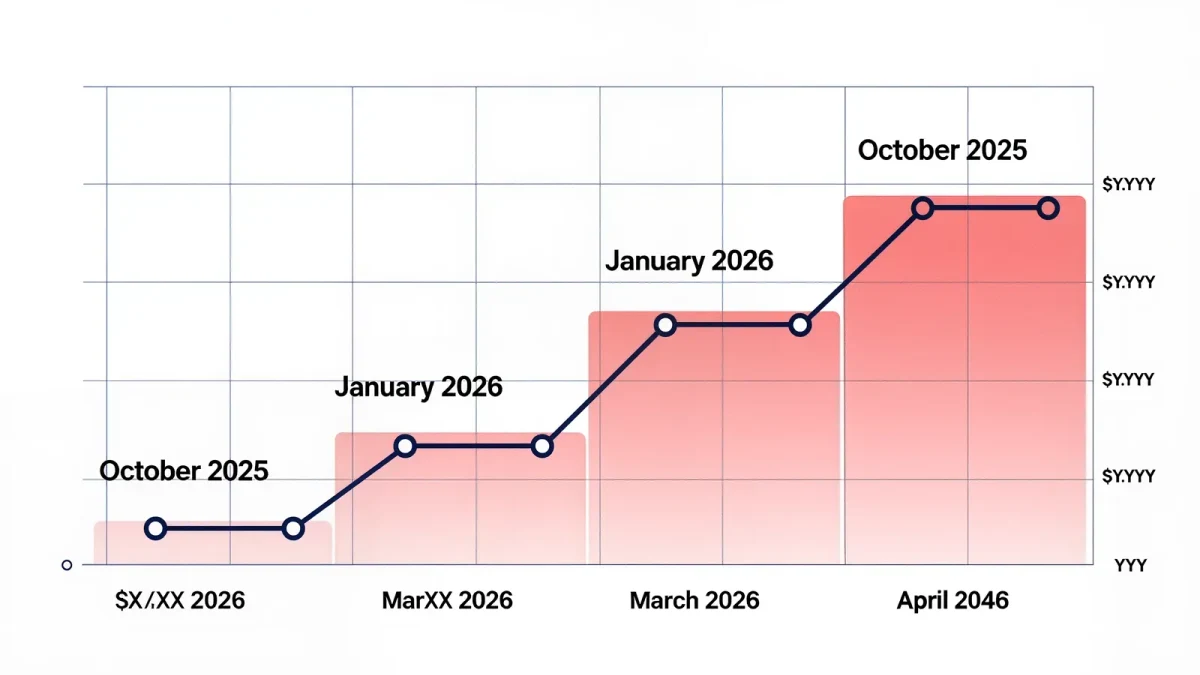
At least four major streaming services raised U.S. prices between October 2025 and mid-2026, and the running list now reads like a season schedule: HBO Max hiked on October 21, 2025, Peacock on January 15, 2026, Netflix on March 26, 2026, and YouTube on April 10, 2026, per Reuters and published price trackers. Each hike lands on the same logic — content costs, sports rights and the push toward ad-supported tiers that platforms actually want you on.
The specifics tell the strategy. Netflix's March 26 increase lifted its ad-supported tier from $7.99 to $8.99 a month and raised the standard plan by two dollars, per Reuters, March 26, 2026 — the smallest increase applied to the ad tier, the one Netflix benefits from filling. Peacock's January 15 rise took Essential from $7.99 to $8.99 and ad-free Premium from $12.99 to $13.99. HBO Max's October 21, 2025 increase, its second in eighteen months, raised the basic plan by a dollar to $10.99 and standard by a dollar and a half to $18.49, per Reuters. YouTube's April 10 increase, its first in three years, added up to four dollars depending on the plan.
Why do prices keep rising on schedule?
Because churn is manageable and advertising wants the room. Every increase nudges a slice of subscribers toward the cheaper ad-supported tier, where the platform earns twice — subscription plus ad revenue — and every full-price holdout quietly raises average revenue per user, the metric investors now watch instead of raw subscriber counts. The pattern is coordination without conspiracy: when one platform absorbs the news cycle for raising prices, the next one's increase reads as normal, and the list above shows how quickly normal arrived.
What does the list say about the form?
That streaming has converged with the cable bundle it replaced. Bundling is back — the Disney+, Hulu and ESPN Select package rose from $17 to $20 for the ad-supported tier — and the average American household now carries roughly 2.9 subscriptions costing about $552 a year, per Reuters, January 21, 2026. The business that promised à la carte freedom has rebuilt the bundle, priced it upward on an annual rhythm, and added advertising on top.
Watch the back half of 2026 for the next entries: the platforms that have not moved in a while are the likeliest movers, and history says a hike landing in one quarter shows up across the industry within two. The list, unlike most television these days, renews reliably.